

Being a father doesn’t just add responsibilities, it restructures your entire life, biologically, psychologically, emotionally, and practically.
You no longer own your schedule, your sleep is broken, your stress is chronic, and your priorities shift from “me” to “everyone else,” which means training starts to feel selfish, optional or indulgent rather than essential; over time that creates guilt around taking time for yourself, exhaustion that kills motivation, and a constant sense that fitness can wait until life is calmer.
So many Dads never start because they don’t see how it fits into their reality, and many who once trained slowly let it slip because responsibility replaces standards, stress replaces structure, and survival replaces self-development, until one day they look up and realise their body has quietly declined not from laziness, but from carrying the weight of everyone else.
For many men, that responsibility becomes the reason fitness slowly disappears. Not because they stop caring, but because life becomes louder. And yet, paradoxically, fatherhood is also one of the most powerful catalysts for change a man will ever experience.
Why Your Health Matters More When You’re a Dad
When you become a father, your health stops being just about you. It becomes about the people who rely on you, who look up to you, and who quietly build their understanding of life around the way you live yours. Your energy, your habits, your emotional stability, and even the way you speak about your body and your health all shape the environment your children grow up in. Whether you intend to or not, you are teaching them what “normal” looks like.
Being healthy isn’t just about avoiding illness or fitting into a certain size of clothes. It’s about having the physical and mental capacity to show up fully as a parent. It’s about having the energy to play on the floor after a long day of work, the patience to respond calmly when things get loud or chaotic, and the resilience to handle stress without becoming withdrawn, irritable, or burned out. When your health is neglected, those things are often the first to suffer. You might still be physically present, but mentally and emotionally you’re running on empty, and children are incredibly sensitive to that.
Your health also directly influences how long and how well you’ll be able to be there for your family. Fatherhood isn’t a short-term responsibility; it’s a lifelong role. Your kids won’t just need you when they’re small. They’ll need you when they’re teenagers navigating identity and pressure, when they’re young adults making big life decisions, and later when they have families of their own. Looking after your health now is an investment in being around for those future chapters, not just existing, but thriving enough to be involved, active, and supportive as the years go on.
The Lessons Fitness Teaches That Your Children Inherit
Becoming physically fit changes far more than your body. It reshapes how you think, how you act, and how you relate to challenges. And when you’re a parent, those internal changes don’t stay internal for long, they become visible in your behaviour, your routines, and the way you carry yourself through life. Your children may never hear you talk about discipline, accountability, or self-respect, but they will learn what those things mean by watching how you live.
Discipline is one of the first lessons fitness teaches you. Training requires you to show up on the days you don’t feel like it, when motivation is low, when the weather is bad, or when the sofa feels more appealing than the gym. Over time, you stop relying on mood and start relying on commitment. That shift quietly changes the way you approach everything else in life. You become someone who does what they said they would do. Your children notice that. They see you leave the house to train when it would be easier not to. They see you plan ahead, organise your time, and stick to routines. Without a single lecture, they learn that consistency matters, that progress comes from repetition, and that discipline isn’t punishment, it’s a form of self-leadership.
Fitness also builds accountability. When you train, you learn very quickly that outcomes are linked to your actions. If you skip sessions, cut corners, or make excuses, progress slows or stops. If you show up, put the work in, and stay honest with yourself, results follow. That cause-and-effect relationship becomes deeply ingrained. You stop blaming circumstances and start taking responsibility. As a father, that mindset shapes the way you speak, the way you handle mistakes, and the way you respond to setbacks. Your kids learn from this too. They see you own your decisions. They see you take responsibility rather than deflect it. They see that growth isn’t about perfection, but about honesty and effort over time.
Perhaps the most profound lesson fitness teaches is self-respect. Looking after your body sends a message, to yourself first, and then to everyone around you, that you are worth caring for. You begin to value your health, your energy, and your future enough to protect them. You start making choices not based purely on comfort or short-term pleasure, but on what supports your long-term wellbeing. Your children absorb this attitude. They grow up seeing that self-care is normal, that personal standards matter, and that treating yourself well is not something to feel guilty about.
Time Management, Structure, and Making It Work Around Family Life
One of the biggest shifts that happens when you become a parent is that time stops feeling abundant. Your day is no longer fully yours. It’s shaped around school runs, work commitments, bedtime routines, family meals, and the countless small responsibilities that come with raising children. In that environment, fitness doesn’t happen by accident. It only happens by design.
This is where time management becomes less about productivity and more about intention. You stop asking, “Do I have time?” and start asking, “What am I willing to make time for?” Because the truth is, the time will never magically appear. It has to be created, protected, and prioritised within the reality of your life. That requires planning, not willpower.
Having a plan is what allows fitness to coexist with family rather than compete with it. When your training is scheduled, it stops being a source of friction or guilt and becomes just another part of the rhythm of the household. It might be early mornings before the house wakes up, lunch breaks that are used efficiently, or evenings that are structured so that everyone knows what’s happening and when. The specifics don’t matter nearly as much as the principle: when you plan your week, you are choosing in advance what matters to you, rather than letting urgency dictate every decision.
This kind of structure actually creates more freedom, not less. When your week has shape, you waste less energy negotiating with yourself. You’re not constantly debating whether to train, when to train, or if it’s “worth it” today. The decision has already been made. That mental clarity reduces stress, reduces decision fatigue, and makes you more present in the moments that matter, with your kids, your partner, and your work.
Your children benefit from this structure too. They grow up in an environment where routines exist, where commitments are honoured, and where balance is visible. They see that life isn’t chaotic by default, that responsibilities can be organised, and that personal goals can coexist with family priorities when approached with thought and care. This teaches them that adulthood isn’t about constantly feeling overwhelmed, but about learning how to manage competing demands with calm and intention.
The Type of Training That Works Best for Busy Family Life
Our program has changed the lives of 1000's of men globally, a high percentage of guys being Dads who want to change for both themselves and to become an inspiration to their kids.
When time is limited and life is full, the goal of training shifts. It’s no longer about doing the maximum amount possible, it’s about doing the minimum that produces the maximum return. For busy parents, especially fathers balancing work, family, and personal responsibility, the most effective training is the kind that is simple, efficient, and sustainable.
This is why strength training should form the foundation. Strength training delivers a high return on investment. It builds muscle, protects joints, improves posture, supports metabolism, and helps prevent injury and age-related decline. More importantly, it preserves physical capability as you get older, the ability to lift your children, carry shopping, move furniture, play on the floor, and stay active without pain. These are not aesthetic benefits; they are functional ones that directly support your role as a parent.
From a time perspective, strength training is also efficient. You do not need long sessions or complicated routines. A well-structured full-body or upper/lower programme performed three times per week can produce exceptional results. Compound movements that train multiple muscle groups at once, such as squats, presses, rows, hinges, and carries, allow you to train your whole body in a short window of time. That means you can improve your health and fitness without stealing hours from your family or work.
Alongside strength training, a small amount of conditioning supports cardiovascular health, stress regulation, and overall energy. This does not need to be long or exhausting. Short, focused bouts of conditioning, whether that’s brisk walking, interval cycling, circuits, or simple finishers at the end of a strength session, are enough to keep your heart healthy and your fitness balanced. The purpose here is not to chase exhaustion, but to support resilience and recovery so you feel better, not more depleted.
The most important quality of any training programme for a busy parent is sustainability. A perfect plan that you cannot stick to is useless. The best programme is the one that fits into your life, not the one that looks impressive on paper. This means choosing training you can recover from, that doesn’t leave you constantly sore, exhausted, or mentally drained. Your training should support your life, not compete with it.
The Physique Academy team will address your time/lifestyle, analyse your goals and create the best training program to ensure you optimise your training and recovery.
These Dads Turned Their Lives Around For Their Family
Take a look below at some of the Dads who took action, embraced the additional accountability and completely changed their lives.
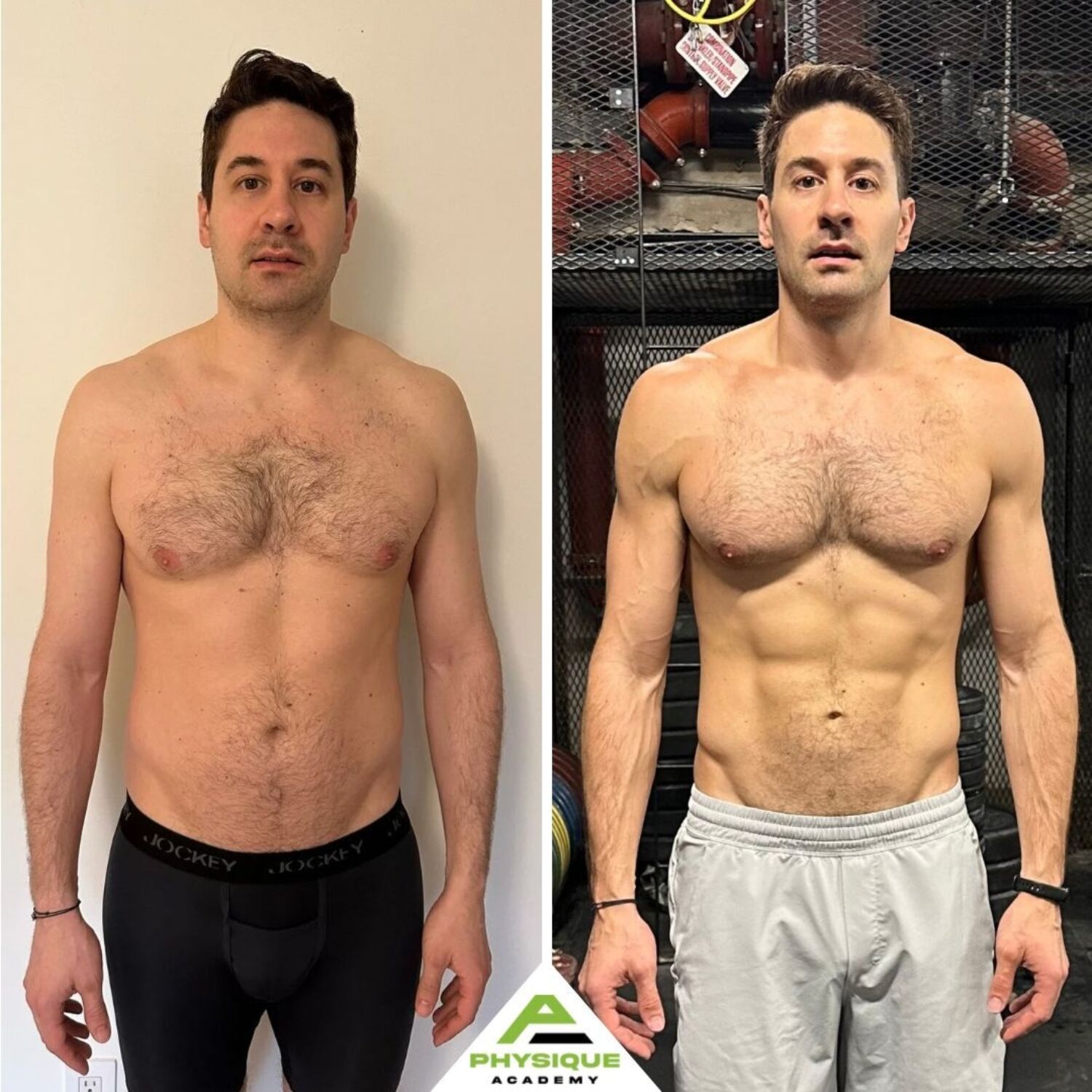
18 weeks with Coach Danny changed everything: From 200.4lbs to 173.5lbs. Sam no longer feels disconnected from his efforts to loving what he sees. From questioning his gym time to feeling genuinely confident in his body. This happened during one of life's biggest challenges - becoming a new father.
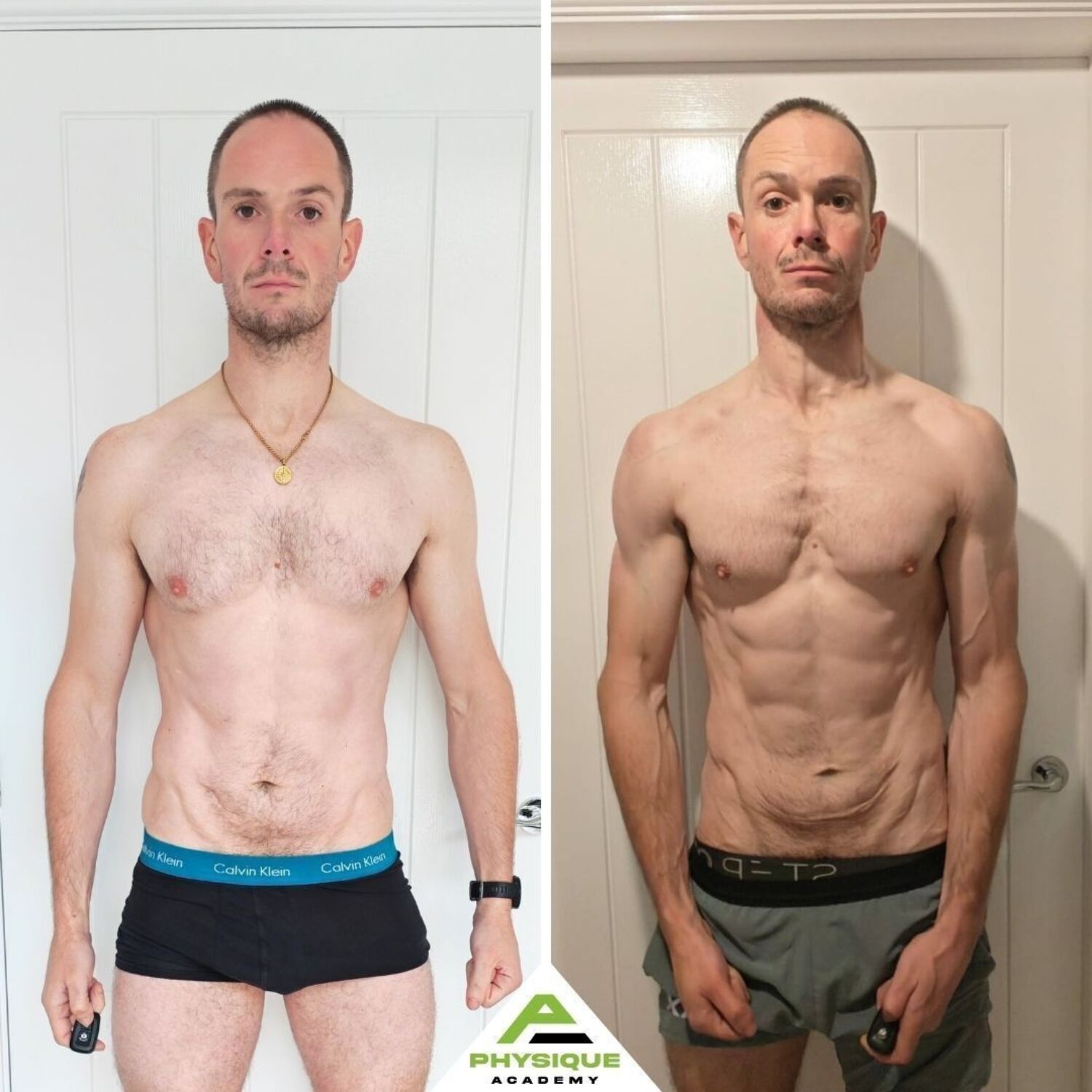
Sean joined Physique Academy to get back on track and manage his training around a physically demanding job and family life. Just 1 month with the program he dropped from 80kg to 75kg, hit running PB and took an a Hyrox.
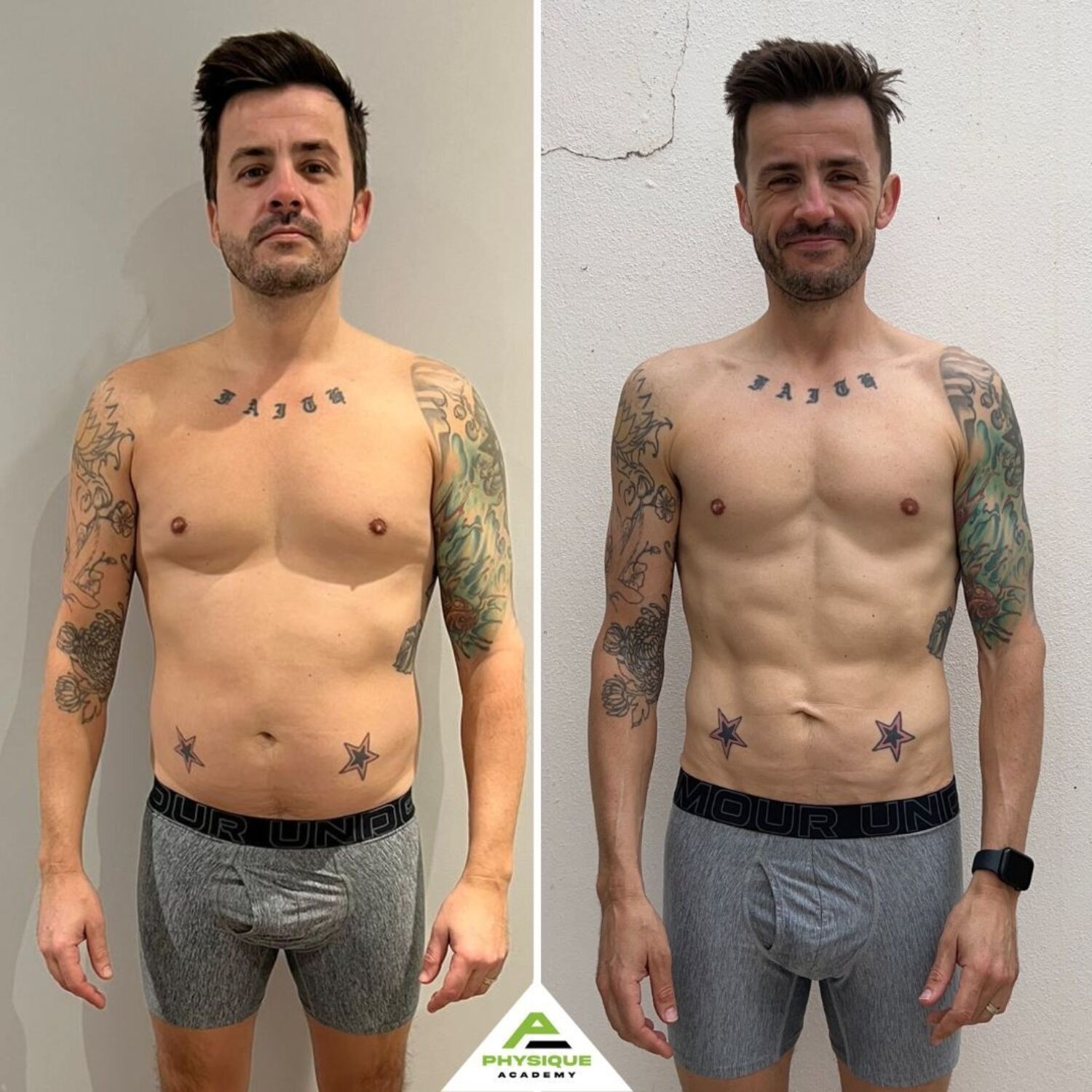
Phil wasn't the father he wanted to be. He felt unmotivated, soft and uncertain. Knowing he had to change to become a better example. just 4 months into the program, Phil's life changed... He discovered something far more powerful: mental fortitude. Phil walked away from a 15-year career as a Creative Director.
No plan. Just the confidence in his ability to sort it out. Now he works with his wife every day, growing their agency on their terms. Spending summers in Portugal. Being present for his kids. Showing them what they can achieve when they take consistent, focused action.
FAQs
1. Do I really need coaching, or can I just train on my own?
You can absolutely train on your own, but most busy fathers don’t fail because they lack information, they fail because they lack structure, clarity, and accountability. Coaching removes the guesswork. It gives you a plan that fits your schedule, keeps you consistent when motivation dips, and helps you avoid wasting time on ineffective routines. Physique Academy is built specifically to provide that structure for men who want results without fitness taking over their life.
2. I only have 30–45 minutes to train. Is that enough to see real results?
Yes, if your training is structured properly. You do not need long sessions to improve your strength, body composition, and health. What matters is intelligent programming, consistency, and progression over time. The Physique Academy approach is designed around time-efficient training that fits into real life, not ideal life.
3. Will training make me too tired for work and family?
Done properly, training should increase your energy, not drain it. Overly intense or poorly planned programmes can leave you exhausted and sore, which is the opposite of what a busy father needs. At Physique Academy, training is programmed to support recovery, improve resilience, and enhance day-to-day performance, not compete with it.
4. I’ve tried getting fit before and always fallen off. What makes this different?
Most people fail not because they lack discipline, but because the plan doesn’t match their reality. When fitness is built around a lifestyle you don’t actually live, it eventually collapses. The Physique Academy model is designed around busy schedules, family commitments, and normal human motivation. It’s not about perfection, it’s about building a system you can sustain long term.
5. Is Physique Academy just about aesthetics, or is it focused on health and longevity too?
While looking good is a great by product, the foundation of the programme is health, performance, and long-term sustainability. The goal is not just to build a physique, but to build a body that supports your life as a father, strong, capable, energetic, and resilient for years to come.