

Losing weight feels like a finish line.
For many men, it’s actually the most dangerous point in their transformation.
After weeks or months of dieting, tracking, and training, it’s natural to feel like you’ve “earned” more freedom. The problem is that the body doesn’t reset overnight.
Without a structured transition, the same habits that helped you lose fat can work against you, or disappear entirely.
At Physique Academy, we’ve coached thousands of men through fat loss and into long-term maintenance. The patterns are clear. The men who regain weight almost always make the same mistakes.
Mistake 1: Increasing Calories Too Quickly
After dieting, hunger is high and food focus is strong. Many men go from a deficit straight back to maintenance or surplus calories.
The result is rapid fat regain.
The body is primed to store energy after a dieting phase. A sudden jump in calories overwhelms the system. Weight rebounds, and frustration follows.
A proper reverse phase increases calories gradually so the metabolism adapts without excess fat gain.
Mistake 2: Dropping Structure Too Soon
Structure is what created the results.
When men stop tracking, stop planning meals, or reduce training intensity too early, consistency disappears. Even small daily slips compound over time.
Sustainable fat loss for men requires systems, not just motivation. Structure doesn’t mean rigidity, it means having a framework that keeps you on track.
Our online coaching for men ensures structure evolves rather than disappears.
Mistake 3: “Bulking” Without Control
Some men think the next step after dieting is to bulk aggressively. They overeat in the name of muscle gain.
This often leads to unnecessary fat gain, poor nutrient partitioning, and the need for another long diet phase later.
Reverse Engineering focuses on performance and muscle quality, not reckless calorie surpluses.
Mistake 4: Ignoring the Psychological Side
Many men complete a diet physically but not mentally.
If your identity is still tied to short-term dieting, old behaviours return. Stress eating, weekend blowouts, and inconsistent routines creep back in.
Long-term transformation requires mindset work. Confidence, discipline, and identity must evolve alongside the physique.
How Physique Academy Solves This
Our coaching doesn’t end when the weight drops, in many ways, that’s where the most important work begins.
Anyone can follow a diet for a period of time. Very few men know how to transition out of a diet without undoing their hard work. That transition is where Physique Academy provides real value and where Phase 2 of our program changes the game for long-term results.
Rather than leaving clients to “figure it out,” we guide them through a structured Reverse Engineering phase designed to stabilise their physique, restore metabolic capacity, and elevate performance.
This isn’t guesswork. It’s a coached, data-led process.
A Structured Transition Out of Dieting
After a fat loss phase, the body is highly adaptive. Hunger hormones are elevated, energy expenditure is reduced, and the body is primed to regain weight if calories jump too quickly.
Phase 2 addresses this head-on.
Clients are taken through a gradual, strategic increase in calories that allows their metabolism to recover while keeping body fat under control. Instead of sudden jumps, adjustments are calculated and monitored weekly.
This teaches clients how to eat more food while maintaining a lean physique — a skill most men never develop on their own.
Data-Driven Coaching, Not Guesswork
Every adjustment in Phase 2 is informed by real data.
We look at:
- Weekly weight trends (not just daily fluctuations)
- Training performance and strength progress
- Step count and daily activity levels
- Sleep quality and recovery markers
- Hunger, energy, and stress levels
- Visual physique changes
This full-picture approach ensures decisions are made with precision. Clients don’t rely on emotion or guesswork, they rely on structure and coaching expertise.
Over time, they learn to understand their own body’s feedback signals, giving them independence and confidence.
Performance Becomes the Priority
In Phase 1, the priority is fat loss.
In Phase 2, the priority shifts to performance.
As calories increase, training is designed to capitalise on higher energy availability. Clients focus on getting stronger, improving output, and building muscle quality.
This leads to:
- Better nutrient partitioning
- Increased metabolic rate
- A more athletic, resilient physique
- Greater training enjoyment and motivation
Clients often hit personal bests in this phase because their body is finally fuelled to perform.
Behavioural Coaching That Sticks
One of the biggest reasons men regain weight is behavioural relapse. Old habits slowly creep back when structure disappears.
Phase 2 reinforces the habits that created success in Phase 1 but evolves them for a sustainable lifestyle.
Clients build:
- Consistent meal structures without rigidity
- Flexible dieting skills for social situations
- Sustainable training routines
- Recovery and stress-management practices
- Accountability systems that keep standards high
This ensures results don’t rely on short-term motivation.
They become part of daily life.
Removing Fear Around Food
Many men finish a diet with a fear of eating more. They associate higher calories with losing control.
Phase 2 removes that fear through education and guided experience.
Clients see first-hand that eating more does not automatically mean gaining fat when done correctly. This builds trust in the process and removes the “all-or-nothing” mindset that drives yo-yo dieting.
Food becomes fuel, not a threat.
Education for Lifelong Control
Perhaps the most valuable part of Phase 2 is education.
Clients don’t just follow instructions, they learn why adjustments are made and how their body responds. They gain tools they can use for life, whether their goal is maintaining leanness, building muscle, or pushing performance.
This level of understanding gives men control rather than dependency.
The Result: Long-Term Ownership
This is why Physique Academy clients don’t just lose weight, they keep it off.
They leave Phase 2 with:
- A lean, stable physique
- A faster, healthier metabolism
- Strong performance in the gym
- Confidence around food
- Habits that support lifelong results
Most men transform once.
Our clients learn how to stay transformed.
After finishing Phase 1 at 172 lbs, this client chose to continue into Phase 2 because he wasn’t the type to quit on a commitment and wanted to build on the results he’d already achieved. His goal was to add muscle and learn how to properly maintain his calorie intake rather than slipping back into old habits. Phase 2 introduced higher calories and increased training intensity, and while eating enough food became the main challenge after a deficit, the payoff was clear. By the end of the phase, he reached 180 lbs, gained noticeable muscle, increased his strength, and even kept his waistline tight despite his calories nearly doubling.
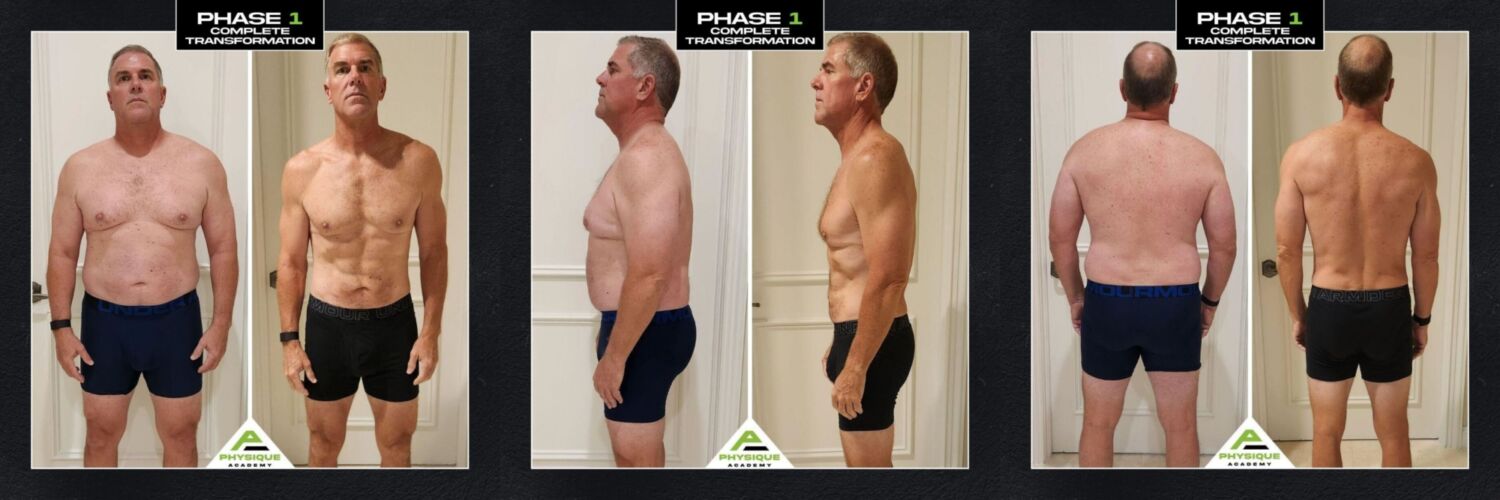
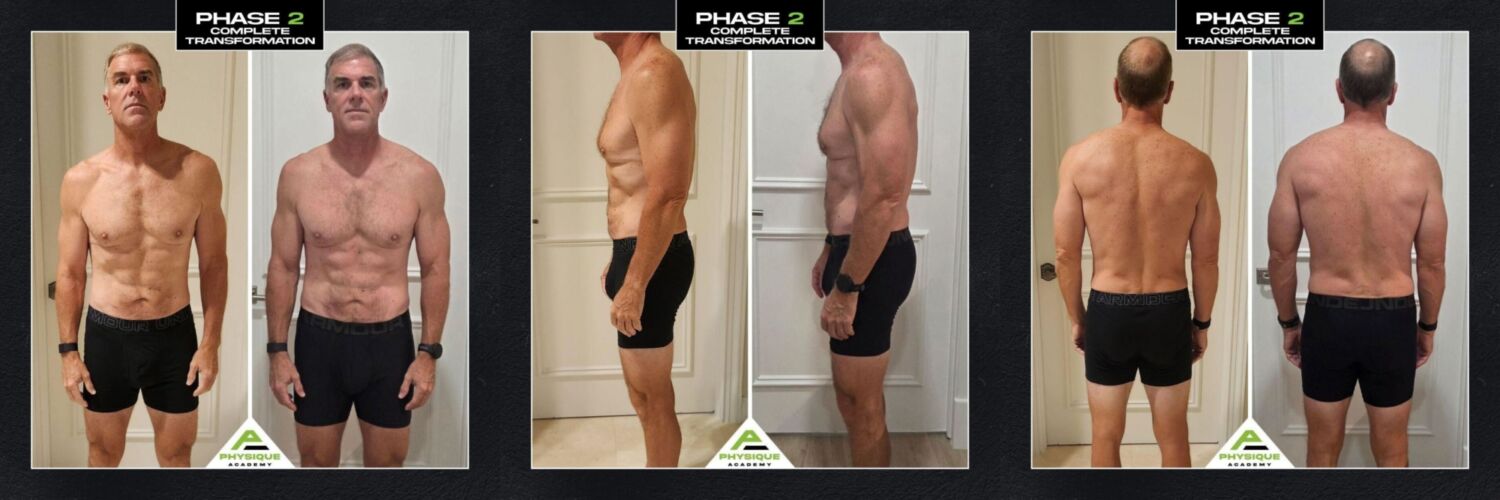
With coaching tailored to the equipment he had available, and adjusted as he added more, his plan evolved at the right pace. This phase strengthened not just his physique but also his confidence and understanding of how nutrition drives muscle growth. He described Phase 2 as the turning point where changes became visibly noticeable and progress started to compound. His message to others is simple: Phase 1 is only the beginning, but Phase 2 is the real foundation for maintaining your results and building a stronger body and mindset long term.